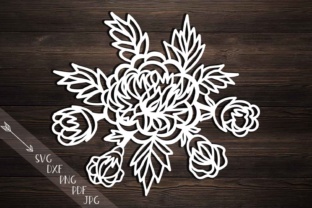
Peonies, Cutting Template, Peony Papercutting, Hand Cutting Templates, Flowers, Rose, Peonies Bouquet: A Practical Guide for Crafters and Designers
Whether you're designing wedding stationery, creating botanical wall art, or assembling a delicate floral gift box, peonies consistently stand out for their lush, romantic fullness and timeless elegance. When paired with precise cutting template resources—especially those tailored to peony papercutting—they become powerful tools for handcrafted expression. Unlike generic floral motifs, a well-designed hand cutting template for peonies respects the flower’s layered petal structure, subtle curves, and natural asymmetry—making it easier to translate botanical beauty into paper, vinyl, fabric, or even wood.
This practical guide is written for adults who want reliable, real-world solutions—not just inspiration. You might be a small-business owner crafting custom invitations, a hobbyist exploring flowers as decorative elements in home décor, or a designer seeking scalable ways to incorporate rose and peonies bouquet silhouettes into repeat patterns. Whatever your goal, understanding how peonies, cutting template, peony papercutting, hand cutting templates, flowers, rose, and peonies bouquet work together helps you save time, reduce material waste, and elevate your finished pieces with professional consistency.
Why Precision Matters in Floral Papercutting
Not all flowers translate equally well to cut-paper design. Roses have tight, spiral centers; peonies boast voluminous, overlapping petals that vary in size and orientation. A poorly scaled or overly simplified cutting template can flatten that dimensionality—resulting in flat, lifeless shapes that lack the softness and movement of real peonies. That’s where purpose-built peony papercutting templates make a difference.
High-quality hand cutting templates for peonies include thoughtful details: gentle inner petal clusters, staggered outer layers, and intentional negative space that mimics light filtering through translucent petals. These aren’t just outlines—they’re engineered guides that support both freehand cutting and die-cutting workflows. For example, a layered peonies bouquet template may separate stems, foliage, and individual blooms so you can mix-and-match elements across projects—from greeting cards to framed botanical art.
Solving Real Challenges with Thoughtful Templates
Many crafters face recurring hurdles: inconsistent sizing between cuts, difficulty aligning multi-layered compositions, or frustration when a rose or peony motif looks “off” despite careful effort. These issues often stem from using non-specialized templates—or worse, tracing from photos without adjusting for scale, grain direction, or tool limitations.
A dedicated cutting template solves these problems by embedding best practices directly into the design:
- Scale calibration: Templates include reference markers (e.g., “1:1 at 100% print”) so your peonies bouquet stays proportional whether printed on A4 or letter-size paper.
- Cut-line optimization: Inner curves are widened slightly to prevent tearing during hand cutting—especially helpful for beginners using craft knives or scissors.
- Multi-flower coordination: Bundled sets often include complementary rose and peonies variants, allowing seamless integration into mixed arrangements without visual dissonance.
For educators or workshop leaders, having a library of hand cutting templates means less prep time and more focus on technique—whether teaching teens papercutting fundamentals or guiding seniors through therapeutic floral crafts.
Practical Applications Across Creative Contexts
The versatility of peony papercutting extends far beyond scrapbooking. Here’s how different users apply these resources meaningfully:
- Wedding & Event Designers: Use layered peonies bouquet templates to create dimensional table numbers, menu inserts, or backdrop accents—cut from pearlescent cardstock for subtle shimmer.
- Small-Batch Stationers: Combine a rose template with a peony variant to build cohesive suites—invitations, RSVP cards, and thank-you notes—all sharing consistent line weight and stylistic rhythm.
- Home Decor Enthusiasts: Scale up a cutting template to cut stencils for painting floral motifs on linen pillowcases or wooden trays—no drawing skills required.
- Teachers & Therapists: Select simplified hand cutting templates with bold outlines for fine-motor development or mindful focus activities centered on flowers.
Importantly, outcomes improve not just with better tools—but with intentional use. For instance, rotating a peony template slightly between cuts adds organic variation to a garland. Or, nesting a small rose inside a large peony silhouette creates depth reminiscent of a real peonies bouquet.
Choosing and Using Templates Effectively
Not every cutting template delivers equal value. Prioritize resources that offer:
- Editable vector files (SVG, DXF): Essential if you use Cricut, Silhouette, or laser cutters—and ideal for resizing without pixelation.
- Print-ready PDFs with crop marks and registration lines: Critical for multi-layer alignment in complex peony papercutting projects.
- Style variety: Look for collections that include open-bloom, bud-stage, and side-profile peonies—plus coordinating rose and foliage options—to build believable peonies bouquet arrangements.
Beginners should start with single-layer hand cutting templates and practice on scrap paper before moving to premium materials. Experienced crafters often layer multiple templates—cutting a base peony, then adding a translucent vellum overlay with a finer rose motif—for dimensional storytelling.
Making It Your Own
Templates are starting points—not endpoints. Once you’ve mastered a peony papercutting layout, experiment thoughtfully: adjust petal length for a more modern look, simplify edges for a graphic poster style, or combine with watercolor washes beneath cut-outs. The goal isn’t replication—it’s confident reinterpretation grounded in solid structure.
Remember: whether you’re building a single peonies bouquet centerpiece or designing a full suite of botanical-themed branding, the right cutting template saves hours, reduces errors, and honors the quiet complexity of flowers like peonies and rose. With intention and the right tools, each cut becomes both precise and personal—transforming paper into poetry, one petal at a time.