Guitar Circle Monogram: A Practical Tool for Guitar Educators and Community Builders
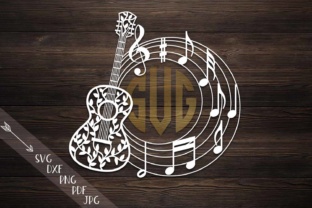
For guitar teachers, community music program coordinators, and ensemble leaders, building cohesion, identity, and continuity across student groups is both essential—and often overlooked. The Guitar Circle Monogram isn’t a software platform or a curriculum package. It’s a purpose-built visual and conceptual framework designed to unify guitar instruction around shared values, progressive skill development, and inclusive participation. At its core, the Guitar Circle Monogram represents a thoughtful, circular model of learning—where technique, musicianship, collaboration, and personal expression interlock rather than compete.
Many educators face recurring challenges that go beyond lesson planning: inconsistent student retention, difficulty bridging beginner-to-intermediate transitions, limited engagement from teens and adults, and a lack of recognizable identity for their programs. Without clear visual language or a unifying philosophy, guitar classes can feel fragmented—like isolated lessons rather than part of a meaningful musical journey. That’s where the Guitar Circle Monogram offers more than symbolism—it delivers structure with flexibility.
How the Guitar Circle Monogram Addresses Real Teaching Needs
The monogram maps five interdependent dimensions: Technique & Tone, Rhythm & Groove, Harmony & Voice Leading, Repertoire & Expression, and Community & Listening. These aren’t linear steps; they’re overlapping domains that grow in depth as students advance. For example, a beginner exploring simple strumming patterns simultaneously develops rhythm awareness (Rhythm & Groove) and begins listening actively to peers (Community & Listening). An advanced student arranging a folk song draws on harmony principles while refining expressive dynamics and contributing to group interpretation.
This design directly supports common goals:
- Reducing drop-off after Year 1: By making progress visible across multiple dimensions—not just “learning more chords”—students see growth even when finger strength or speed lags.
- Supporting mixed-level ensembles: A single piece can be adapted so beginners focus on groove and pulse, intermediates explore voicings, and advanced players take solos or arrange intros—each operating meaningfully within their zone of development.
- Strengthening program visibility: The monogram serves as a clean, scalable logo for newsletters, posters, and digital platforms—reinforcing that your guitar circle is intentional, pedagogically grounded, and welcoming to all ages and backgrounds.
Practical Applications You Can Implement This Week
You don’t need to overhaul your curriculum to begin using the Guitar Circle Monogram. Start small—and stay practical.
Reframe your next group warm-up. Instead of “let’s play the C–G–Am–F progression,” try: “Today we’ll explore Rhythm & Groove through syncopated strumming, while keeping our Technique & Tone steady—listen for how your thumb anchors the bass while your fingers lift cleanly.” Naming the dimension makes it conscious, teachable, and assessable.
Use the monogram as a reflection tool. At the end of each term, invite students (especially older teens and adults) to place a dot inside the circle where they feel their strongest—and one where they’d like more support. No grades. No judgment. Just orientation. Over time, this builds metacognition and ownership—two predictors of long-term musical engagement.
Design inclusive repertoire choices. When selecting pieces for class performance, ask: *Does this piece offer entry points across at least three dimensions?* A bossa nova arrangement might emphasize groove and harmony for some, melody and expression for others, and steady bass lines for developing finger independence. That kind of layered accessibility is central to the Guitar Circle Monogram’s ethos.
Tailoring the Approach Across Different Contexts
How you apply the Guitar Circle Monogram depends less on what you teach—and more on who you teach with and why you gather.
In school settings, music teachers often juggle tight schedules and standardized expectations. Here, the monogram helps align guitar work with broader arts standards—e.g., connecting Community & Listening to collaborative problem-solving (a 21st-century skill), or linking Harmony & Voice Leading to pattern recognition in math. It also simplifies reporting: instead of vague comments like “improving steadily,” you might note, “demonstrates growing confidence in harmonic choices during ensemble improvisation segments.”
In community centers and adult education programs, motivation is often intrinsic—not tied to exams or grades. The Guitar Circle Monogram supports autonomy by honoring diverse goals: one participant may prioritize expressive playing (Repertoire & Expression), another may seek deeper rhythmic fluency (Rhythm & Groove), and a third may join primarily for social connection (Community & Listening). Framing all these as equally valid parts of the same circle reduces comparison and fosters mutual respect.
For private studio teachers adding group options, the monogram provides a ready-made scaffold for hybrid instruction. You might use the circle to rotate weekly focuses—“This month, we highlight Technique & Tone with daily tone-matching challenges”—or create “dimension badges” students earn through consistent practice and peer feedback. It adds coherence without rigid scripting.
Key Considerations Before You Begin
While the Guitar Circle Monogram is intentionally flexible, successful implementation hinges on a few thoughtful choices:
- Start with language, not logos. Introduce the five dimensions conversationally before handing out branded materials. Let students help name examples—they’ll internalize it faster if it feels co-created.
- Align assessment informally. You don’t need new rubrics—just shift how you observe. Notice when a student begins anticipating chord changes (harmony), holds steady tempo while others rush (rhythm), or adjusts volume to blend (listening). These are tangible signs of growth within the circle.
- Resist over-designing. The power of the Guitar Circle Monogram lies in its simplicity—not its complexity. Avoid adding sub-rings, tiers, or point systems unless they serve your specific group’s culture and needs.
- Revisit your “why” regularly. Every few months, ask yourself: *Is this helping students feel more capable, connected, and curious?* If the answer drifts toward “no,” simplify—not add.
Ultimately, the Guitar Circle Monogram works best when it remains a living reference—not a checklist. It’s there when you’re choosing repertoire, adjusting pacing, welcoming a new student mid-semester, or explaining your teaching approach to parents or administrators. Its value isn’t in perfection, but in consistency: a quiet, steady reminder that guitar education thrives not in isolation, but in circles—of sound, support, and shared intention.
Whether you lead a high-school guitar lab, host Saturday morning sessions at a senior center, or guide a cohort of adult beginners through their first year, the Guitar Circle Monogram offers a grounded, human-centered way to honor where students are—and illuminate where they’re going—together.