What Is a Clean Business Card—and Why It Still Matters in 2024
In an age of digital networking, QR codes, and LinkedIn invites, you might wonder: Do business cards still matter? The answer is a resounding yes—but not just any business card. What truly stands out—and delivers real value—is the clean business card.
A clean business card isn’t defined by minimalism alone. It’s a purposefully designed, uncluttered, and highly functional tool that communicates professionalism, clarity, and intentionality at a glance. In this article, we’ll break down what makes a business card “clean,” why that simplicity is more powerful than ever, and how to create one that builds trust—not confusion.
What Exactly Makes a Business Card “Clean”?
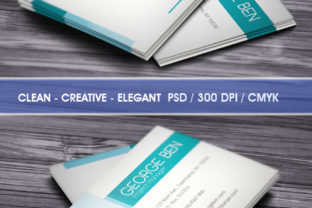
At its core, a clean business card prioritizes function over flourish. It removes visual noise—excessive fonts, competing colors, decorative borders, stock icons, or dense blocks of text—so the essential information shines through.
Here’s what typically defines a clean design:
- One or two typefaces only—often a clean sans-serif for readability (e.g., Inter, Helvetica, or Montserrat)
- Ample white space—not “empty” space, but intentional breathing room that guides the eye
- Consistent, restrained color palette—frequently monochrome, duotone, or a single accent color
- Clear hierarchy—name first, title second, contact details third (with logical visual weight)
- No unnecessary graphics—logos are included only if they reinforce brand identity, not distract from it
Think of brands like Apple or MUJI: their communication reflects confidence in simplicity. A clean business card operates on the same principle—it says, “I respect your time and attention.”
Why Clean > Clutter in Today’s Professional Landscape
We live in an attention economy. The average person spends less than 8 seconds deciding whether to engage with a piece of visual content. A cluttered card—with three fonts, five colors, a watermark, and a tiny QR code buried in the corner—doesn’t stand a chance.
But clean design does more than look good. It signals:
- Credibility — A polished, intentional card suggests you’ve invested thought into your personal or company brand.
- Clarity of purpose — When your role, name, and contact info are instantly scannable, people remember you—and know exactly how to follow up.
- Adaptability — Clean cards translate seamlessly across contexts: handed at a conference, left on a café table, or scanned via smartphone camera.
Consider this real-world example: A freelance graphic designer hands out two versions of her card—one vibrant, layered with textures and overlapping elements; another stark white background, black text, subtle logo top-left, and a single URL centered at the bottom. At a local small-business mixer, attendees kept the second card. Why? Because it was easy to read, easy to photograph, and easy to file away digitally later.
Common Misconceptions About Clean Design
Before moving forward, let’s clear up a few myths:
- “Clean = boring.” Not true. Clean design can be bold, memorable, and deeply expressive—just without visual overload. A single spot color, elegant paper stock, or subtle embossing adds sophistication without sacrificing clarity.
- “It’s just for creatives or tech folks.” Wrong. Accountants, therapists, contractors, educators—even nonprofit volunteers—benefit from clean cards. Clarity builds trust in every field.
- “Digital replaces the need for physical cards.” While digital sharing is convenient, research shows 72% of professionals keep physical cards they receive, often referencing them days or weeks later when making hiring or partnership decisions.
The Practical Power of a Clean Card in Daily Work Life
Let’s move beyond theory. How does a clean business card function in real-world scenarios?
Networking That Sticks
At a crowded industry event, people exchange dozens of cards. If yours is legible from across a table—and doesn’t require squinting or flipping under poor lighting—it’s more likely to be retained, shared, or entered into a CRM.
Client Onboarding & First Impressions
When meeting a new client face-to-face, handing over a clean card reinforces your reliability before you even speak. It subtly says, “I organize my work—and my communication—with care.”
Offline-to-Online Bridges
A clean card often includes just one digital touchpoint: a short, branded URL (e.g., hello@yourname.co) or a scannable QR code linking to your portfolio or Calendly page. No email addresses, phone numbers, and social handles all jumbled together—just the next best step.
How to Build Your Own Clean Business Card (Without a Designer)
You don’t need advanced design skills—or a big budget—to create a clean card. Follow these actionable steps:
- Start with your essentials: Name, title, company (if applicable), phone/email, and one web destination.
- Choose a single, readable font—and use it consistently. Avoid script or decorative fonts for body text.
- Limit colors to two: e.g., charcoal + cream, navy + white, or black + kraft paper.
- Use alignment deliberately: Left-aligned text feels grounded and professional; centered text works well for minimalist, boutique-style brands.
- Print on quality stock: 400gsm matte or soft-touch paper elevates even the simplest design. Texture matters as much as typography.
Tools like Canva, Sticker Mule’s free designer, or even Google Slides (set to 3.5" × 2") offer clean templates and intuitive drag-and-drop editing.
Looking Ahead: Clean Cards in an Evolving World
As AI tools generate personalized outreach and NFC-enabled cards replace QR codes, the underlying principle remains unchanged: People connect with clarity.
A clean business card isn’t nostalgic—it’s strategic. It acknowledges that human attention is finite, memory is selective, and trust is built through consistency and ease. Whether you’re launching a startup, pivoting careers, or representing a decades-old firm, your card is often the first tangible expression of who you are and how you work.
And in a world increasingly saturated with noise, choosing clean isn’t just aesthetic—it’s ethical. It honors the recipient’s time. It reflects integrity in presentation. And most importantly, it ensures your message isn’t lost before it’s even read.
Final Thought: Clean Is a Choice—Not a Compromise
Designing a clean business card isn’t about stripping away personality. It’s about focusing it. It’s choosing what to highlight—and what to release. It’s understanding that sometimes, the most powerful statement is the quietest one.
So before you order your next batch—or send that PDF to print—ask yourself: Does this card make it easier for someone to remember me, reach me, and believe in me? If the answer is yes, you’ve already nailed the essence of clean.