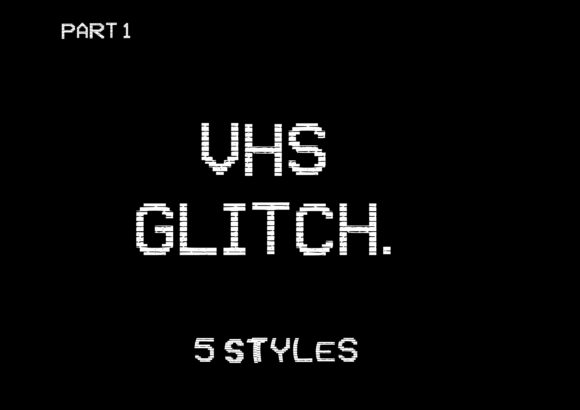
VHS Glitch Family: A Strategic Lens for Intentional Creative Decision-Making
When you encounter the term VHS Glitch Family, it’s easy to default to nostalgia—warped scan lines, chroma bleed, time-stretched audio. But for professionals navigating complex creative and operational decisions, this aesthetic framework represents something more consequential: a deliberate language of controlled imperfection. It’s not about retro decoration. It’s about leveraging visual and conceptual dissonance as a cognitive tool—one that surfaces assumptions, tests message resilience, and sharpens strategic clarity.
What VHS Glitch Family Actually Is (and Why That Matters)
The VHS Glitch Family refers to a coherent set of analog distortion artifacts—tracking errors, dropouts, signal noise, time-base instability—that emerged from the physical limitations of VHS tape playback. Unlike random digital corruption, these effects follow predictable patterns rooted in mechanical wear, electromagnetic interference, and bandwidth constraints. Their consistency makes them interpretable. That interpretability is what transforms them from nostalgic texture into a functional design and communication asset.
For marketers crafting campaign variants, educators designing multimodal learning materials, or product teams stress-testing user interface messaging, the VHS Glitch Family offers a rare combination: high recognizability, low abstraction, and built-in semantic tension. It signals “this is mediated,” “this is time-bound,” and “this requires your active interpretation.” That’s not decorative—it’s functional framing.
Where Intentional Use Creates Real Leverage
Consider three grounded use cases where applying the VHS Glitch Family thoughtfully yields measurable advantage:
- Message Prioritization: When prototyping a landing page or pitch deck, overlaying subtle tracking distortion on secondary text forces immediate recognition of what survives the glitch—and what vanishes. If your core value proposition remains legible amid mild horizontal jitter, it’s likely clear and concise. If only decorative elements persist, your hierarchy needs revision.
- Brand Positioning Clarity: A small business launching a service in an oversaturated market can use a VHS Glitch Family treatment—not on logos or core assets, but on comparative feature tables or customer journey maps. The intentional degradation highlights which differentiators hold up under ambiguity. What remains readable across distortion often aligns with what customers actually remember and act on.
- Collaborative Sense-Making: In cross-functional workshops, projecting a process flow diagram with intermittent signal dropout invites teams to fill gaps using shared mental models—not assumptions. This reveals alignment gaps faster than traditional whiteboarding, because the glitch doesn’t hide ambiguity—it makes it visible and negotiable.
How to Approach It Without Falling Into Aesthetic Noise
Effective use starts with constraint—not addition. Ask first: What decision am I trying to improve? Then ask: What kind of perceptual pressure would expose weakness or reinforce strength in that decision? Only then does the VHS Glitch Family enter the workflow.
Start small. Apply one artifact—say, vertical hold instability—to a single slide in a presentation draft. Observe how attention shifts. Does the audience lean in to decipher? Do they skip over degraded sections entirely? That response tells you more about message architecture than any analytics dashboard.
Timing matters. Reserve heavier treatments for moments requiring reflection—not explanation. A glitched transition between strategy pillars in a keynote encourages pause and synthesis. Applying the same effect to contact information undermines trust and accessibility. Context determines whether the VHS Glitch Family functions as amplifier or eraser.
Risks of Using VHS Glitch Family Without Strategic Anchoring
Without clear intent, the VHS Glitch Family becomes noise masquerading as nuance. Common missteps include:
- Assuming universality: Not all audiences decode analog distortion the same way. For professionals who never handled VHS tapes—or for those with visual processing sensitivities—the effect may trigger confusion or exclusion rather than engagement.
- Overwriting substance: When applied to critical information (pricing, safety instructions, legal disclosures), even subtle glitches introduce unnecessary cognitive load and potential liability. Legibility isn’t stylistic—it’s functional and ethical.
- Confusing novelty with differentiation: A heavily glitched website homepage might stand out—but if users can’t locate the CTA or understand the offering within three seconds, distinctiveness has actively harmed conversion. Distinction without comprehension is strategic debt.
The risk isn’t the VHS Glitch Family itself. It’s deploying it as a substitute for rigorous thinking about audience, objective, and outcome.
Planning Tips for Long-Term Value
If you’re integrating the VHS Glitch Family into recurring workflows, treat it like any other strategic tool—document usage, track impact, refine thresholds. For example:
- Define acceptable distortion levels per channel: Light horizontal jitter may work in social video thumbnails; full chroma shift is reserved for experimental internal briefings.
- Map artifacts to decision types: Dropouts test redundancy; time-base wobble tests sequencing logic; sync loss reveals dependency assumptions.
- Establish review checkpoints: Before launch, ask: Did the glitch reveal something we needed to fix? Or did it merely distract from what mattered?
This discipline prevents drift into trend-chasing. It keeps the VHS Glitch Family tethered to outcomes—not aesthetics.
When to Step Back—and Why That’s Strategic
There are clear inflection points where setting aside the VHS Glitch Family is the highest-leverage choice:
- When building foundational assets (brand guidelines, core documentation, onboarding sequences)—clarity and consistency outweigh expressive tension.
- When addressing regulated or high-stakes communication (compliance notices, medical instructions, financial disclosures)—precision must dominate perception.
- When audience research shows low tolerance for ambiguity or strong preference for clean, modern interfaces—respecting those preferences is more strategic than asserting stylistic identity.
Strategic maturity isn’t measured by how much you use a tool—but by how clearly you understand when not to use it.
Final Observation: It’s About Attention Architecture, Not Nostalgia
The enduring utility of the VHS Glitch Family lies in its ability to shape attention—not evoke memory. In environments saturated with polished, algorithm-optimized content, controlled imperfection creates friction that invites deeper processing. That friction isn’t valuable in itself. It’s valuable only when it serves a specific cognitive or communicative goal: clarifying priority, exposing assumption, inviting co-creation, or signaling authenticity through restraint.
So before you reach for a glitch plugin or layer a scan line overlay, pause. Name the decision you’re supporting. Identify the gap you’re trying to illuminate. Then—and only then—select the artifact that most precisely applies pressure where it’s needed. That’s how the VHS Glitch Family moves from background texture to foreground strategy.