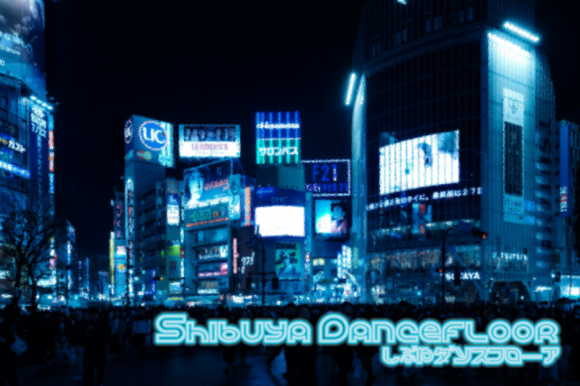
Shibuya Dancefloor Family: A Practical Resource for Creative Professionals
Shibuya Dancefloor Family is a curated collection of royalty-free dance music loops, stems, and one-shots designed with authenticity and production-ready quality in mind. Unlike generic stock libraries, it reflects the rhythmic energy, stylistic nuance, and textural detail found in contemporary Japanese club culture—particularly the layered, genre-blending sound associated with Shibuya’s underground venues. It’s not a full DAW plugin or subscription service; rather, it’s a focused audio asset pack built for producers, content creators, and educators who need expressive, culturally grounded material without licensing friction.
What Sets Shibuya Dancefloor Family Apart
At its core, Shibuya Dancefloor Family delivers consistency through intentionality. The pack was recorded and processed using analog outboard gear and vintage drum machines, then curated to preserve dynamic range and transient clarity. Each loop—whether a 90-BPM broken beat groove, a syncopated taiko-inspired percussion line, or a filtered synth bassline—is tempo-locked to common electronic music standards (85, 90, 95, 100, 105, 110, 115, 120, 125, 130 BPM) and available in both dry and lightly processed variants. This dual-state approach supports both immediate drag-and-drop use and deeper sound design work.
The library includes over 420 individual files across three main categories: Drum Loops (160), Bass & Synth Loops (140), and Percussion & FX Stems (120). All are delivered in 24-bit/48kHz WAV format, with consistent naming conventions (e.g., “SD_Floor_Snare_110BPM_A.wav”) and embedded metadata for faster integration into modern DAWs like Ableton Live, Logic Pro, and Bitwig Studio.
Real-World Usability and Workflow Integration
In practice, Shibuya Dancefloor Family performs well in time-constrained environments. A freelance video editor building a TikTok series on Tokyo street fashion used the 105-BPM drum loops as rhythmic scaffolding for quick-cut sequences—layering them beneath voiceover without needing pitch correction or time-stretching artifacts. Similarly, an indie game developer integrating ambient club textures into a narrative-driven mobile title found the FX stems especially useful: reversed vinyl crackle, distant crowd murmur, and low-passed neon sign hum added subtle environmental depth without overwhelming the mix.
Usability extends beyond tempo alignment. The loops avoid over-compression, retaining enough headroom for parallel processing. When tested alongside competing packs from mainstream libraries, Shibuya Dancefloor Family maintained greater stereo imaging stability when pitched ±3 semitones—a practical advantage when adapting material across multiple project keys. Its lack of heavy mastering also means it sits naturally beside live-recorded vocals or acoustic instrumentation, reducing the need for excessive EQ carving during mixing.
Quality, Flexibility, and Long-Term Value
Quality here isn’t defined by sheer fidelity alone but by functional integrity. Transients are preserved, phase coherence is verified across multi-mic recordings (such as the conga/tom combos), and loop points are manually refined—not auto-detected—to prevent clicks or timing drift after repeated playback. That attention translates directly to reliability: users report fewer instances of “loop fatigue” during extended composition sessions, likely due to the intentional variation in swing feel and micro-timing within each set.
Flexibility comes from structure. The inclusion of isolated kick, snare, and hi-hat stems allows for custom groove reconstruction—useful for producers developing signature rhythms or teaching rhythm programming concepts. Educators have adopted the bass loops in music technology courses to demonstrate modal interchange in J-pop-influenced progressions, while small studio owners use the percussion stems as reference tracks when calibrating room acoustics.
Long-term value hinges on reusability. Because the material avoids dated trends (no heavily sidechained EDM drops or AI-generated vocal chops), it remains relevant across projects spanning years—not just months. One podcast producer noted using the same 90-BPM shaker loop across three seasons of a cultural interview series, varying only its placement and effects chain to match shifting tonal moods.
Who Benefits Most—and When
Shibuya Dancefloor Family suits professionals who prioritize sonic identity over convenience. It’s especially valuable for:
- Content creators producing culturally resonant short-form video—particularly those covering urban lifestyle, fashion, travel, or Japanese pop culture;
- Indie game developers building atmospheric, location-specific audio backdrops where authenticity matters more than cinematic scale;
- Music educators teaching rhythm theory, cross-genre analysis, or digital audio workflows using real-world examples;
- Freelance composers scoring documentary or branded content requiring understated, non-clichéd energy;
- Small business owners curating in-store or event playlists that reflect aesthetic cohesion without sounding algorithmically generated.
It’s less ideal for users seeking fully arranged, ready-to-release tracks—or those working exclusively in genres where rigid quantization and hyper-polished timbres dominate (e.g., commercial hip-hop or radio pop). Its strength lies in texture, subtlety, and contextual grounding—not broad stylistic coverage.
Practical Considerations and Limitations
Shibuya Dancefloor Family does not include MIDI files, notation, or detailed production notes—so users looking for deep technical breakdowns of how a particular loop was constructed will need to reverse-engineer it themselves. Likewise, there’s no included license for commercial redistribution of unmodified loops as standalone products (e.g., selling a loop pack derived from this one), though standard royalty-free usage for end-user projects applies.
Another limitation is regional specificity. While the aesthetic draws from Shibuya’s club ecology, it doesn’t attempt to represent broader Japanese musical traditions—no shamisen samples, no min’yō folk motifs, no taiko ensembles outside of stylized interpretations. That focus is a strength for targeted use, but it shouldn’t be mistaken for comprehensive cultural representation.
Finally, while the pack integrates cleanly into most workflows, users relying heavily on AI-assisted search (e.g., Splice’s AI tagging or Soundly’s semantic engine) may find the metadata less robust than larger commercial libraries. Manual organization—by tempo, instrument, or mood—is recommended for teams managing large-scale asset libraries.
Making It Work for Your Needs
If you’re evaluating Shibuya Dancefloor Family for a specific project, start by isolating your primary need: Is it rhythmic foundation? Textural contrast? Cultural resonance? For example, a marketer launching a campaign around Tokyo’s youth subcultures might begin with the 110-BPM drum loops and layer in the FX stems for spatial realism—then pair those with original field recordings of Shibuya Crossing for hybrid authenticity. A blogger producing audio essays on global electronic scenes could use the bass loops to sonically illustrate shifts in harmonic language between 2000s Shibuya-kei and current Neo-Shibuya trends.
For long-term adoption, treat it as a reference palette—not a crutch. Import a few loops per session, experiment with reversing, granular slicing, or resampling through bitcrushers or tape emulators, and document what works. Over time, patterns emerge: certain snare textures cut through dense mixes better at -6dB peak, specific bass loops respond well to saturation at 12 o’clock on a particular plugin, and so on. That kind of hands-on familiarity builds real workflow value far beyond the initial download.
Shibuya Dancefloor Family won’t replace your entire sample library. But for professionals who need dependable, character-rich audio material rooted in a distinct creative ecosystem—and who understand that utility often lives in restraint—it offers quiet, consistent returns.