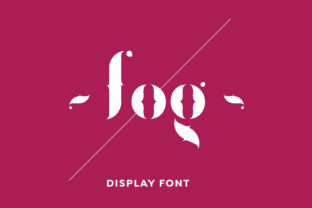
Fogtype: Clarity in the Age of Digital Overload
Scrolling through a dozen browser tabs, juggling notifications across three devices, and drafting a message while half-listening to a meeting—this isn’t multitasking. It’s cognitive friction. And it’s eroding focus, deep work, and meaningful output. Enter Fogtype: not a tool that adds another layer of automation, but one designed to reduce noise, sharpen intent, and restore agency over how we write, think, and communicate.
What Fogtype Actually Is (and What It Isn’t)
Fogtype is a text-first interface built around intentional input. It doesn’t promise AI-generated perfection or replace human judgment—it supports it. At its core, Fogtype strips away distractions: no sidebar suggestions, no auto-summarize buttons, no embedded analytics dashboards competing for attention. Instead, it offers subtle, context-aware assistance—like gentle syntax nudges, tone-aware rephrasing options, or real-time clarity scoring—only when you opt in or when patterns suggest a need.
Unlike many writing tools that default to optimization (for SEO, engagement, or speed), Fogtype defaults to intelligibility. It asks: *Does this sentence serve the reader’s understanding—or just fill space?* That distinction matters more than ever, as audiences grow less tolerant of vague phrasing, inflated jargon, and content that feels written *at* them rather than *with* them.
Why Attention to Clarity Is No Longer Optional
We’re not facing an “information shortage.” We’re drowning in low-signal text: emails that take three reads to decode, documentation buried under nested bullet points, marketing copy that prioritizes buzzwords over benefit. A 2023 study by the Plain Language Association International found that professionals spend nearly 17 hours per week re-reading or clarifying written materials—time lost not to complexity, but to avoidable ambiguity.
This isn’t just about efficiency. It’s about equity. Clear writing lowers cognitive load for neurodiverse readers, non-native speakers, and people accessing content on mobile or with limited bandwidth. Fogtype reflects that shift—not as a compliance checkbox, but as a design principle baked into its behavior. For example, its inline suggestions flag passive constructions only when they obscure responsibility (“The report was delayed” → “The team delayed the report”), and it highlights nominalizations (“utilization,” “implementation”) only when simpler verbs exist (“use,” “implement”). These aren’t grammar rules imposed; they’re readability cues calibrated to real-world comprehension.
How Workflows Are Quietly Changing
Modern knowledge work no longer follows linear pipelines. A freelance copywriter might draft in Fogtype, paste into a CMS, then tweak based on client feedback—all while referencing Slack threads and Notion notes. A product manager could use Fogtype to distill sprint retrospectives into actionable summaries before sharing with engineering leads. An educator might draft lesson explanations there first, checking for grade-level accessibility before exporting to LMS platforms.
What ties these uses together isn’t feature depth—it’s portability of clarity. Fogtype doesn’t lock users into a walled garden. Its lightweight export options (plain text, Markdown, clean HTML) integrate cleanly with existing stacks. More importantly, its feedback model trains pattern recognition over time: users begin spotting their own foggy habits—overqualification (“It could potentially be argued…”), hedging (“some might suggest…”), or vague referents (“this approach”)—even outside the app.
Real Shifts Behind the Screen
Two quiet trends are converging to make tools like Fogtype increasingly relevant:
- The decline of “polished-first” culture: Teams no longer wait for “final drafts” before sharing ideas. But early-stage writing often carries extra ambiguity—and that ambiguity spreads. Fogtype helps surface those rough edges *before* misalignment takes root.
- Rising expectations for cross-role literacy: Engineers write customer-facing release notes. Marketers explain technical trade-offs to executives. Teachers translate curriculum standards into parent-friendly updates. Clarity isn’t a “comms team” skill anymore—it’s a baseline professional competency.
These aren’t abstract shifts. They show up in hiring posts (“must communicate complex concepts simply”), in investor decks (“explain your moat in one sentence”), and in internal surveys where “unclear communication” consistently ranks among top collaboration pain points.
Practical Implications—Not Just Promises
For creators and freelancers: Fogtype reduces revision cycles. One UX writer reported cutting client-requested rewrites by 40% after adopting it—not because the tool wrote better, but because early drafts surfaced assumptions earlier. She used its “audience lens” toggle to preview how a paragraph landed for technical vs. non-technical readers, adjusting emphasis before sending.
For business owners and managers: Clarity scales. A small SaaS founder began using Fogtype to rewrite onboarding emails. Open rates didn’t jump dramatically—but support ticket volume related to “I don’t understand step 3” dropped 28% in six weeks. The change wasn’t flashy, but it freed up 10+ hours weekly for her support lead.
For educators and trainers: Fogtype helps scaffold writing instruction without oversimplifying. A high school history teacher uses its live clarity score as a formative metric—not as a grade, but as a conversation starter: *“Your thesis scores high on specificity—let’s now check if your evidence matches that precision.”*
Not Magic—Just Better Defaults
Fogtype doesn’t claim to eliminate ambiguity. Human communication is inherently interpretive. What it does offer is consistent, low-friction support for reducing *avoidable* fog—those moments where meaning gets lost not from complexity, but from habit, haste, or misaligned assumptions.
Its strength lies in restraint. It won’t auto-correct “affect” to “effect” unless context strongly suggests error. It won’t insert emojis or exclamation points to “boost engagement.” And it doesn’t require training data uploads or profile creation—privacy isn’t a setting; it’s foundational.
This aligns with a broader recalibration in digital tooling: users increasingly favor tools that respect boundaries—of attention, time, and autonomy. Fogtype fits there not because it’s the most powerful, but because it’s the least obstructive.
Getting Started Without Overcommitting
You don’t need to overhaul your workflow to test Fogtype’s value. Try one of these low-lift entry points:
- Next email draft: Paste your raw message into Fogtype first. Use its “concision mode” to spot redundancies (“in order to” → “to”, “due to the fact that” → “because”). Then copy back—no new habits required.
- Team documentation: When updating a shared process doc, run a section through Fogtype’s “reader-first” view. Does it assume prior knowledge? Does it name actors clearly? Adjust, then commit.
- Feedback loops: Share a Fogtype-processed draft with a colleague and ask: *“What’s the first thing you’d clarify?”* Compare that to past feedback—you’ll likely notice fewer “what does this mean?” comments.
None of these require buy-in from IT, budget approval, or integration timelines. They’re experiments in clarity—not implementations.
Looking Ahead—Without the Hype
The future of tools like Fogtype isn’t about doing more. It’s about enabling more deliberate choices—when to simplify, when to elaborate, when to pause and reframe. As voice interfaces mature, as asynchronous collaboration deepens, and as attention becomes even scarcer, the ability to convey precise meaning with minimal friction won’t be a differentiator. It will be table stakes.
Fogtype doesn’t chase that future with speculative features. It meets today’s needs—tight deadlines, mixed-audience messages, fatigue-induced typos—with quiet consistency. Its evolution is measured in reduced cognitive load, not added functionality. And that’s why professionals across roles keep returning: not for flash, but for fidelity—to idea, to audience, and to intention.
If your writing often feels like shouting into static, Fogtype won’t amplify your voice. It will help you tune the frequency.