Chinese Dragon: More Than Myth—A Living Symbol for Modern Creativity and Connection
When you hear “Chinese Dragon,” what comes to mind? A fiery parade float? An embroidered robe at a wedding? A red envelope tucked into a child’s hand during Spring Festival? For many adults—especially creators, educators, small business owners, and digital communicators—the Chinese Dragon isn’t just folklore. It’s a flexible, resonant symbol with real-world utility across branding, storytelling, education, design, and community-building.
What Is the Chinese Dragon—Really?
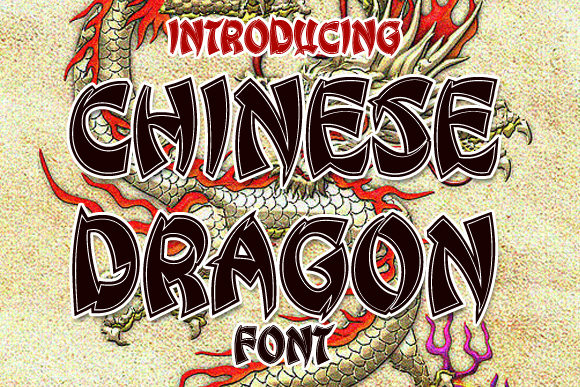
The Chinese Dragon (Lóng) is fundamentally different from Western depictions. It’s not a fire-breathing antagonist hoarding gold—it’s a benevolent, celestial force tied to water, wisdom, prosperity, and transformation. With antlers like a deer, eyes like a rabbit, scales like a carp, and claws like an eagle, it’s a composite of strengths—not a singular beast, but a convergence of qualities. That makes it unusually adaptable: no rigid “canon” to enforce, no fixed personality to constrain. Instead, it offers layered meaning that shifts with context, culture, and intention.
Where and When People Actually Use the Chinese Dragon Today
It shows up where meaning matters—and where people want to signal respect, continuity, or aspiration without cliché.
For Creators & Designers: A Visual Anchor with Depth
A freelance illustrator designing a logo for a tea brand rooted in Fujian traditions might use subtle dragon-scale motifs in the border—not as a mascot, but as texture that whispers heritage. A motion designer animating a cultural documentary doesn’t need roaring flames; a slow, sinuous tail curling around a calligraphy stroke conveys movement, rhythm, and reverence all at once. Because the Chinese Dragon carries built-in symbolism (harmony, balance, auspicious timing), it helps creators communicate complex ideas quickly—without needing a caption or voiceover.
For Educators & Content Makers: A Bridge Between Concepts
An ESL teacher in Toronto uses a simplified dragon silhouette to teach compound words (“dragon boat,” “dragon fruit,” “dragon lady”—then discusses how language layers stereotype and story). A university lecturer on East Asian philosophy projects a Song dynasty scroll showing dragons among clouds—not to lecture on mythology, but to spark discussion on how cultures visualize change, power, and interdependence. The Chinese Dragon works here because it’s familiar enough to land, but rich enough to unpack.
For Small Business Owners & Marketers: Authentic Cultural Resonance
A Brooklyn-based bakery launching a matcha-mochi line doesn’t slap a cartoon dragon on the box. Instead, its packaging features embossed, minimalist cloud-and-dragon motifs inspired by Ming porcelain—subtle, elegant, and quietly aligned with the product’s origin story. Customers don’t need to know the history to feel the intention: care, craft, continuity. That kind of resonance builds trust faster than slogans ever could—especially when serving diaspora communities who recognize the nuance.
For Freelancers & Bloggers: A Narrative Catalyst
A sustainability writer researching bamboo cultivation in Guangxi interviews a third-generation farmer whose family motto is “Like the dragon, bend—but do not break.” That phrase becomes the anchor of her article on climate-resilient agriculture. The Chinese Dragon isn’t decorative here—it’s a lived metaphor, lending emotional weight and cross-cultural clarity to technical reporting. Readers remember the image *and* the insight.
What to Consider Before Bringing the Chinese Dragon Into Your Work
Its power lies in authenticity—not ornamentation. That means asking practical questions before use:
- Who is this for? If your audience includes people with direct cultural ties to Chinese traditions, avoid flattening the symbol into generic “Asian flair.” A dragon used in a corporate diversity campaign needs deeper grounding than one used in a children’s book about weather patterns.
- What’s the function? Is it decorative? Structural? Metaphorical? A dragon motif in a yoga studio’s mural signals flow and energy; the same image on a financial advisor’s website could unintentionally evoke volatility unless carefully contextualized.
- Where does it sit in the hierarchy? Used as a background texture or subtle watermark, it supports. Used as a central mascot with googly eyes, it risks reducing centuries of layered meaning to novelty. Scale and placement matter as much as intent.
- Is there reciprocity? If you’re drawing from Chinese visual language, consider supporting contemporary Chinese artists, translators, or cultural educators—not just citing tradition, but engaging with living practice.
Realistic Outcomes—Not Just Aesthetics
People don’t reach for the Chinese Dragon because it “looks cool.” They reach for it because it delivers results:
- A podcast host uses dragon-inspired chapter transitions (gentle gong + rising flute) to signal thematic pivots—listeners report improved retention and emotional pacing.
- A curriculum developer embeds dragon-themed problem-solving challenges in a STEM unit (“Design a water channel system inspired by dragon-ruled rivers”)—students engage more deeply with fluid dynamics *and* cultural geography.
- A boutique hotel in Vancouver integrates dragon-scale tilework in its lobby floor—not as decor, but as a tactile invitation to slow down and observe pattern, repetition, and variation. Guests photograph it, yes—but more importantly, they pause.
It’s Not About “Using” the Symbol—It’s About Aligning With Its Logic
The Chinese Dragon doesn’t command attention. It invites interpretation. It doesn’t dominate space—it moves *through* it. That makes it uniquely suited to today’s creative and professional landscape, where audiences tune out forced messaging but respond to coherence, subtlety, and layered meaning.
So if you’re drafting a brand manifesto, sketching a workshop outline, selecting fonts for a bilingual newsletter, or choosing imagery for a grant application about intergenerational knowledge—you might find the Chinese Dragon already fits. Not as decoration. Not as trope. But as a quiet, steady, scale-shifting ally—ready to coil around your idea and help it rise.